
Container Loading
Uses AI to optimize container loading, maximizing space utilization, reducing transportation costs, minimizing cargo damage risks, and enabling seamless integration with WMS/ERP systems for a fully digital.
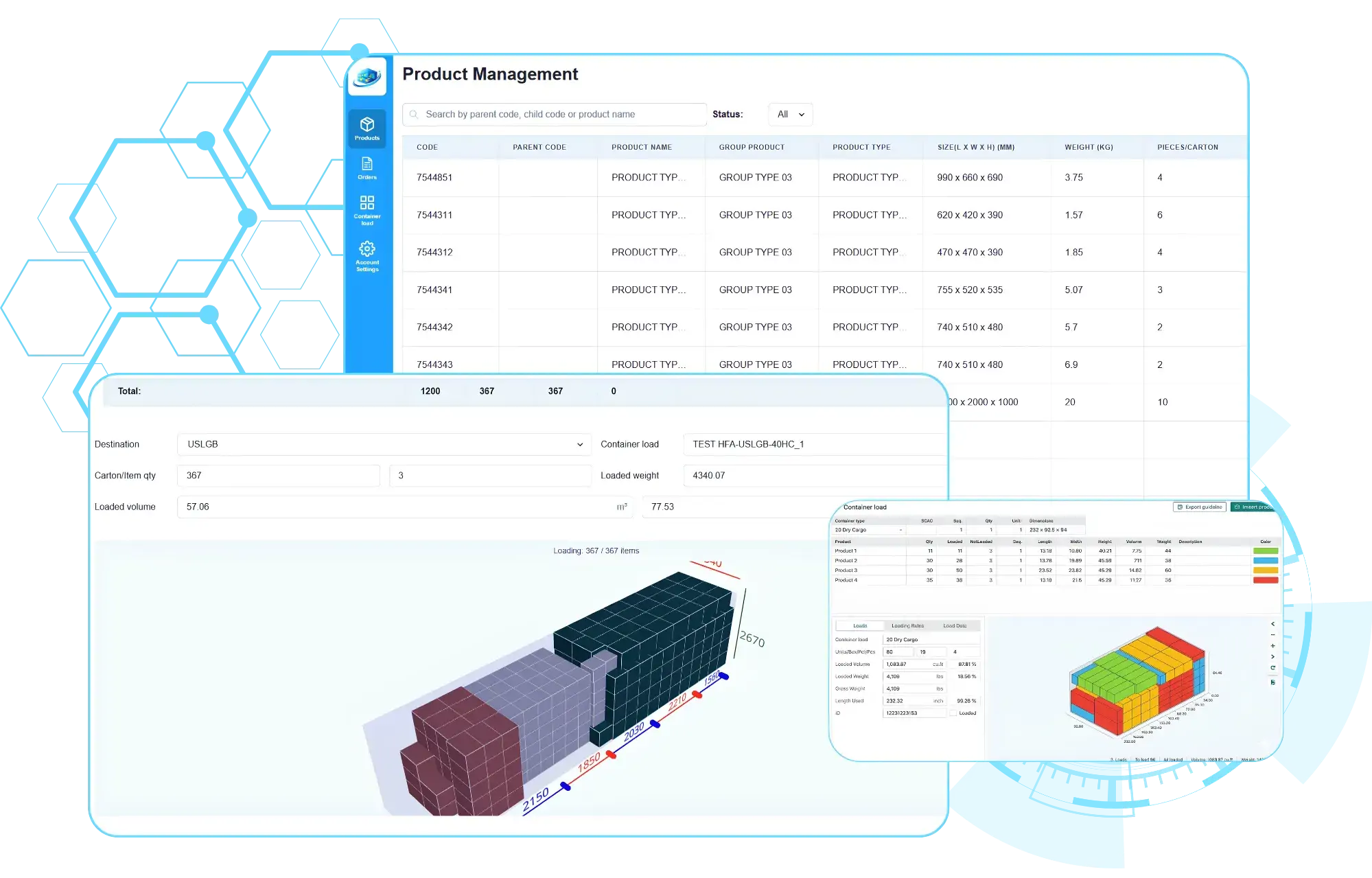
Uses AI to optimize container loading, maximizing space utilization, reducing transportation costs, minimizing cargo damage risks, and enabling seamless integration with WMS/ERP systems for a fully digital.
Container Loading Optimization (T-SmartPack) is a digital transformation initiative designed to modernize logistics and supply chain operations. It focuses on automating container loading planning, replacing manual processes with intelligent algorithms that maximize space utilization and reduce shipping costs.
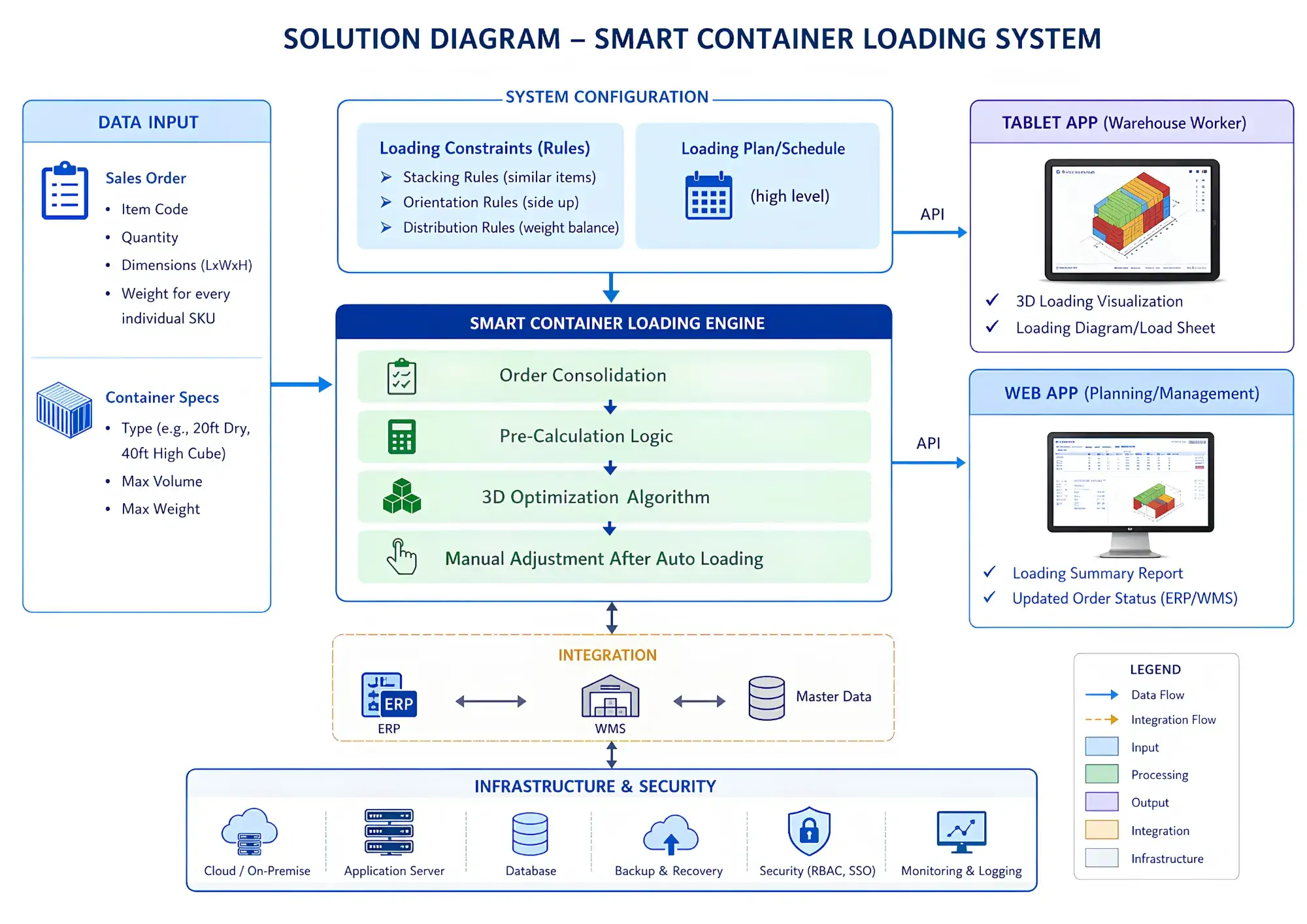

Uses AI to optimize container space based on item size, weight and loading rules.

Splits one order across multiple containers.

Allows users to define loading constraints.

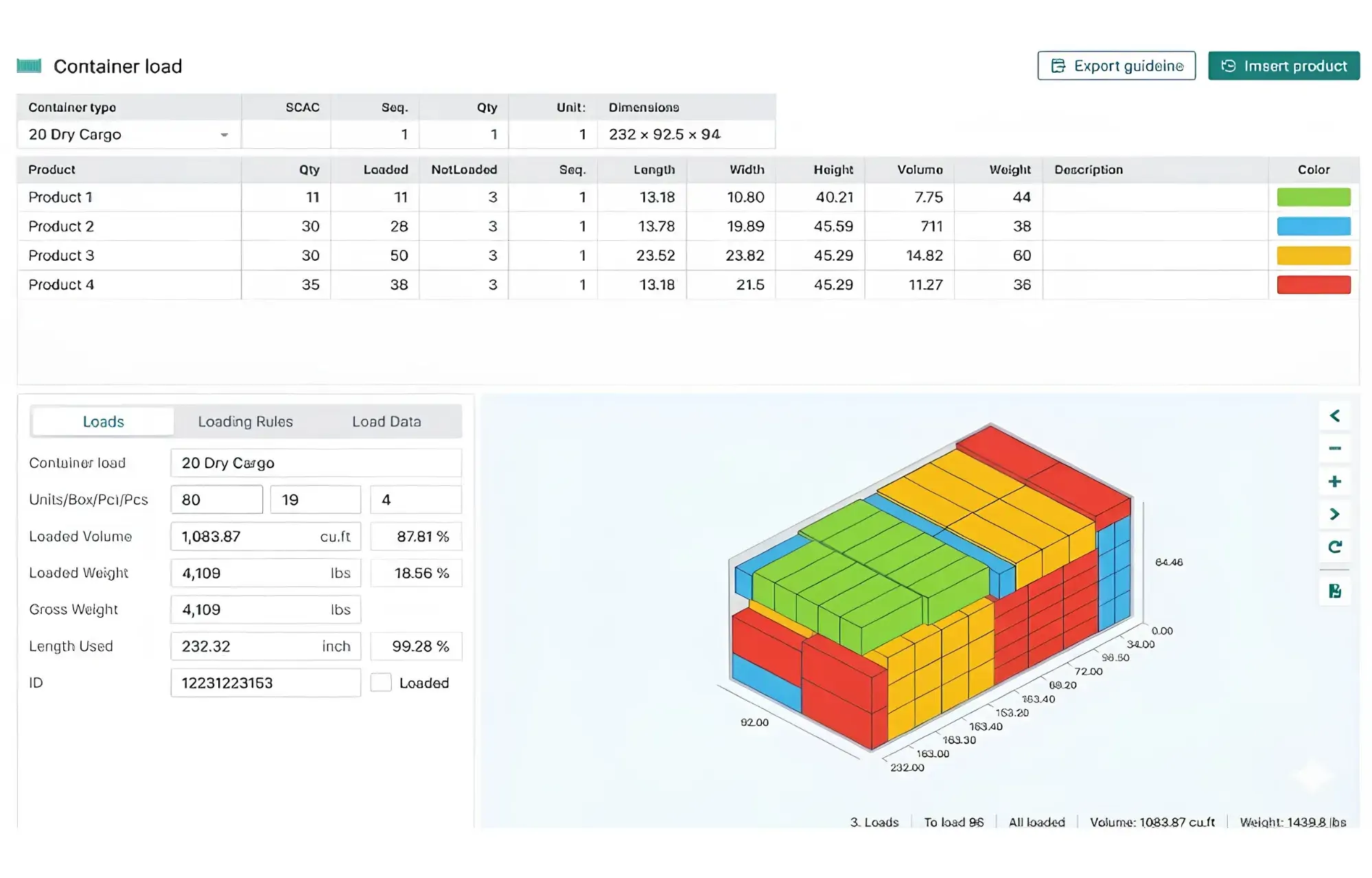
Displays item layout clearly inside containers.

Exports clear reports on space and load.
Optimize container space, reduce shipping costs, and improve logistics operational efficiency with AI technology.

Optimize carton orientation and stacking to eliminate wasted space, increase container fill rates, and reduce the number of containers needed.

Generate ready-to-use loading plans in advance to minimize trial-and-error and speed up warehouse operations.

Ensure proper weight distribution and load-bearing sequences to reduce the risk of cargo damage during loading and transit.

Standardize loading processes across warehouses and easily scale operations as order volumes grow without proportional increases in labor.
Flexible deployment options for manufacturing, logistics, warehousing, and e-commerce businesses, with various transportation models.
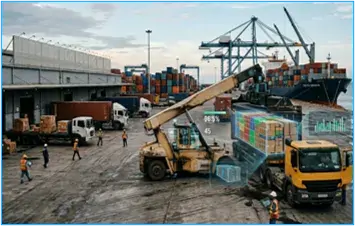
Optimize container loading to maximize space, reduce freight costs, and ensure consistent loading quality.
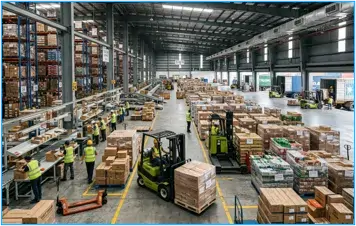
Generate loading plans to speed operations, reduce manual work, and support high-volume logistics.
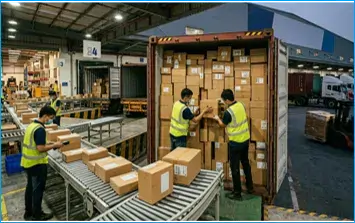
Optimize retail container loading to maximize space, handle peak volumes, and reduce shipping costs.
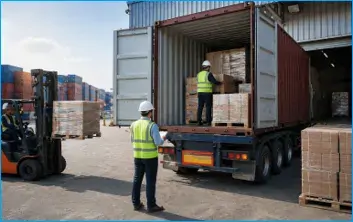
Optimize FCL and LCL loading with fast, accurate, cost-efficient plans to improve customer satisfaction.
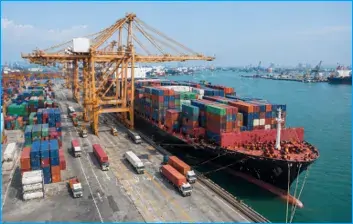
Support multi-destination loading with correct sequence for smooth unloading and delivery.
A comprehensive suite of features enables automated queue planning, visual simulation, and intelligent queue management.
Create and manage product data via UI or bulk Excel import, ensuring accurate dimensions for efficient planning and container optimization.
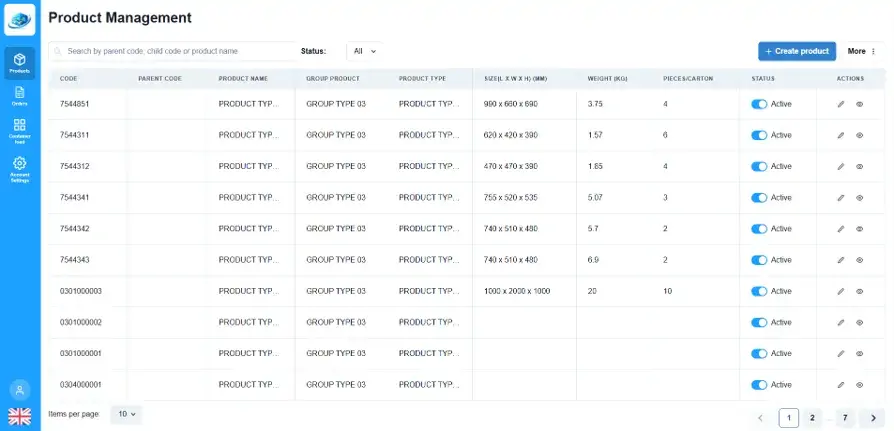
Flexible deployment on enterprise infrastructure, easy integration with existing systems, and scalability to meet operational needs.
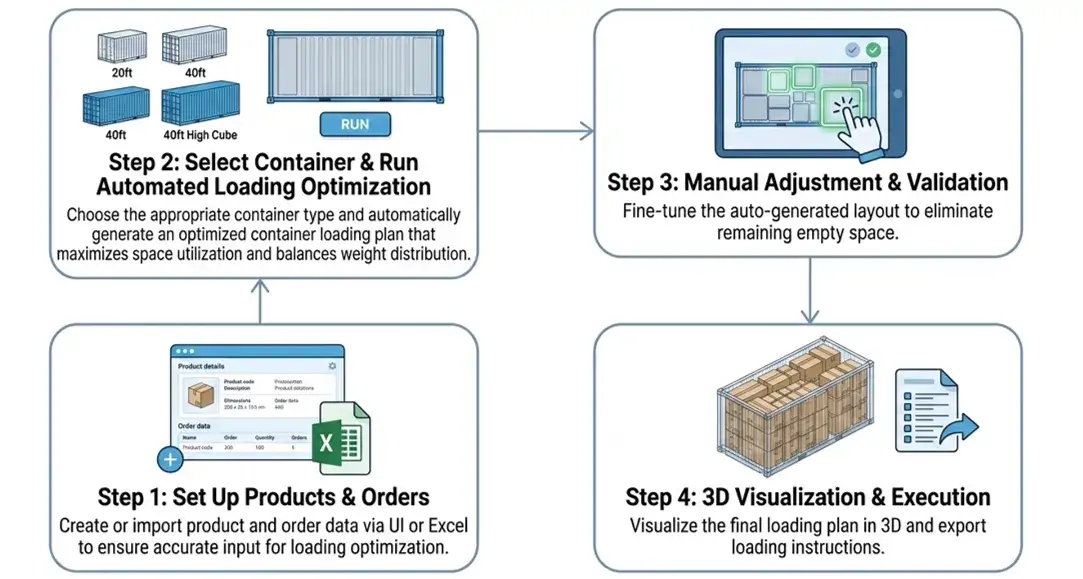
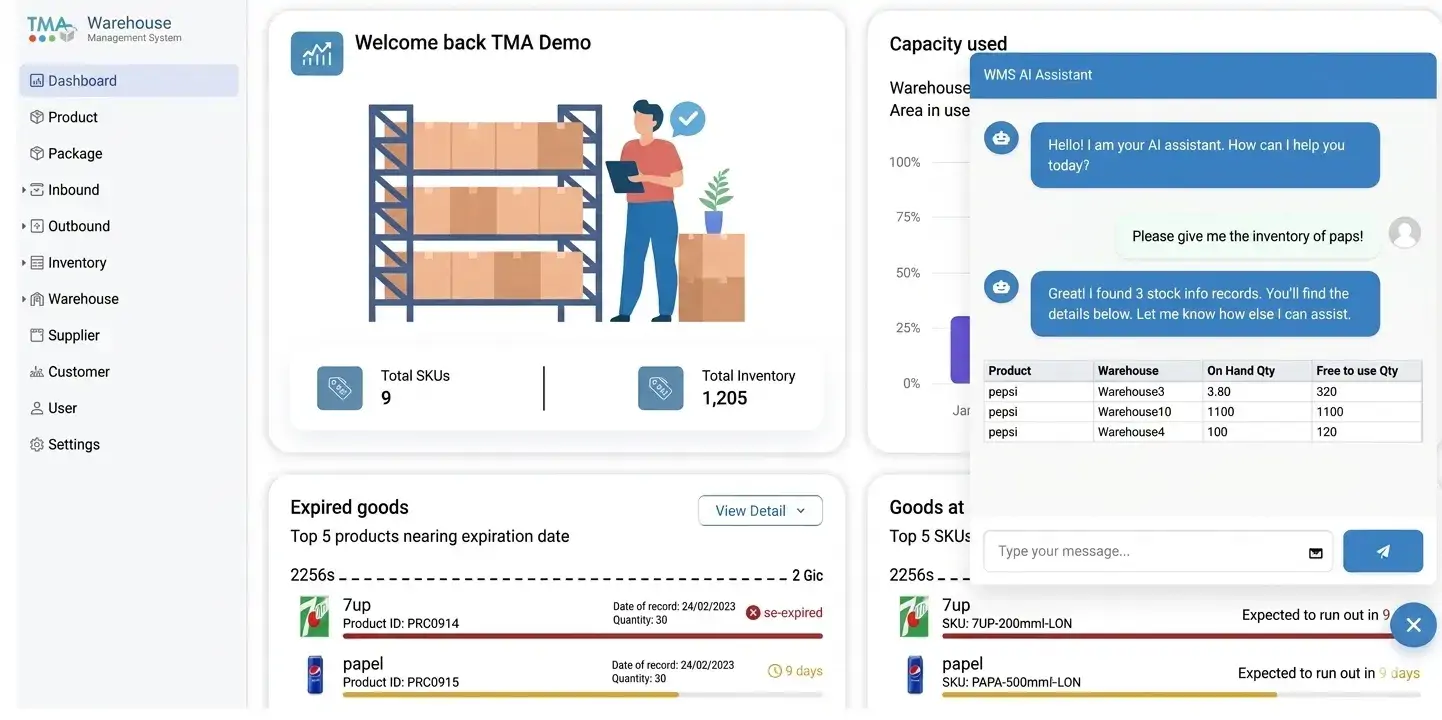
Project highlight: The AI-powered Supply Chain Management Project delivers a transformative solution for warehouse and logistics operations. It combines Warehouse Management Assistant and Automatic Container Loading into a unified platform, enabling natural language queries, real-time order tracking, and intelligent container loading optimization.
About client: The client is a Vietnamese manufacturer and logistics provider managing large-scale warehouse operations and diverse product categories. They required a scalable solution to handle growing demand, improve efficiency, and reduce costs in a competitive market.
Client Challenges:
Manual inefficiency: Inventory checks and container planning were slow and error-prone.
Space utilization: Poor loading practices led to wasted container capacity and higher shipping expenses.
Limited visibility: Lack of real-time tracking made it difficult to respond to low stock or delays.
Scalability: Existing systems struggled to adapt to increasing order volumes and complex logistics requirements.
Solutions:
AI-powered warehouse assistant: Natural language queries for instant inventory checks.
Optimization algorithms: Intelligent 3D container loading with weight distribution and space efficiency.
Integrated dashboards: Real-time order tracking, automated alerts, and dynamic reporting.
System integration: Seamless connection with WMS and ERP platforms.
Benefits:
Maximize Container Utilization: Optimize carton orientation and stacking to eliminate wasted space and achieve higher container fill rates.
Reduce Shipping Costs: Lower transportation costs by reducing the number of containers required for each shipment.
Faster and More Efficient Loading: Generate ready-to-use loading plans in advance to minimize trial-and-error and speed up warehouse operations.
Improved Cargo Safety: Ensure proper weight distribution and load-bearing sequences to reduce the risk of cargo damage during loading and transit.
Scalable and Standardized Operations: Standardize loading processes across warehouses and easily scale operations as order volumes increase, without proportional labor growth.